
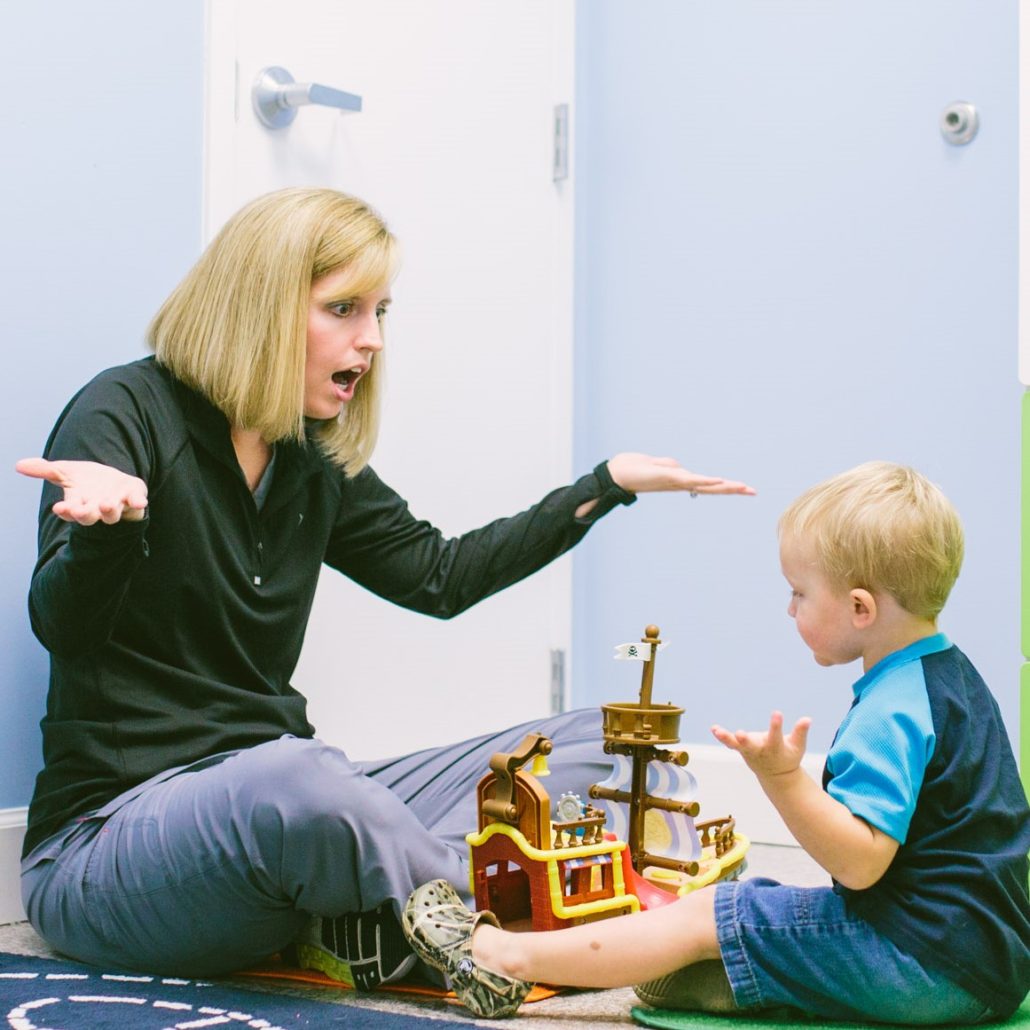
Non-Verbal Communication
Non-verbal communication is often part of social language, or pragmatics. This includes a child’s ability to make requests and communicate using his or her hands, space, or body language. Non-verbal communication can include pointing, gesturing, eye gaze, signing, making facial expressions, using body language (shrugging, sad/happy face), creating distance between a speaker, etc. Pointing and gesturing is how a child will first indicate his/her wants and needs. These cues generally fade as a child begins to use words rather than gestures by 2 years old. As a child becomes older, he or she will use non-verbal communication paired with words in order to effectively communicate a point (i.e. shrugging when sad).
If your child struggles to use appropriate pragmatic or non-verbal communication skills, contact us!
Copyright ©2016 all rights reserved
Powered by Tri-County Therapy